
Clinic patient queue management: how to run a smoother queue

A crowded waiting room is rarely about too many patients. It is usually about no one knowing who is next, who has arrived and how long the wait will be. Good clinic patient queue management fixes that with a few simple habits and a shared view that the front desk, the doctor and the patients can all see.
This guide walks through a queue routine that works for small clinics, dental practices and multi-specialty clinics in the Philippines, and shows where software can take the manual work off your front-desk staff.
Why waiting rooms get chaotic
Most queue problems come from the same few causes. Spotting which ones apply to your clinic tells you where to start. Good clinic patient queue management is mostly about visibility and habit, not extra staff.
- Booked patients and walk-ins are tracked separately. The appointment book says one thing, the notebook at the desk says another, and the doctor never sees the full picture.
- Arrival is not recorded. If no one marks a patient as arrived, the doctor cannot tell whether the 10:00 patient is already waiting or still stuck in traffic.
- Patients cannot see their place. People who do not know the order keep asking the front desk, which slows the desk down even more.
- Each doctor has a different pace. A single line for the whole clinic hides the fact that one doctor is running late while another is free.
Separate the three kinds of patients
Before you change any tools, agree on how your clinic treats three groups: patients with an appointment, walk-ins, and patients who need to be seen urgently.
Booked patients
Patients with an appointment should be seen close to their booked time. Their slot is a promise. Keep slot lengths realistic: if a new-patient consultation usually takes 30 minutes, do not book it into 15.
Walk-ins
Walk-ins are normal in Philippine clinics, so plan for them instead of fighting them. Decide whether they fill gaps between booked patients or join the end of the line, and tell the front desk to say so politely. A clear rule is easier to defend than a case-by-case decision.
Urgent cases
Write down what counts as urgent (for example high fever in a child, chest pain, heavy bleeding) and who decides. The nurse or doctor makes that call, not the receptionist, and the patient is moved up in the queue without a debate at the desk.
A simple check-in routine
The single most useful habit is recording arrival the moment a patient walks in. Here is a routine that takes under a minute per patient:
- Greet the patient and find their booking or register them if they are new.
- Confirm their HMO or PhilHealth details and whether they have a letter of authorisation, so surprises are caught before the consultation.
- Mark them as arrived so they join the line in the right order.
- Tell them roughly how many people are ahead of them, and where to sit.
- Let the nurse know if vitals should be taken while they wait.
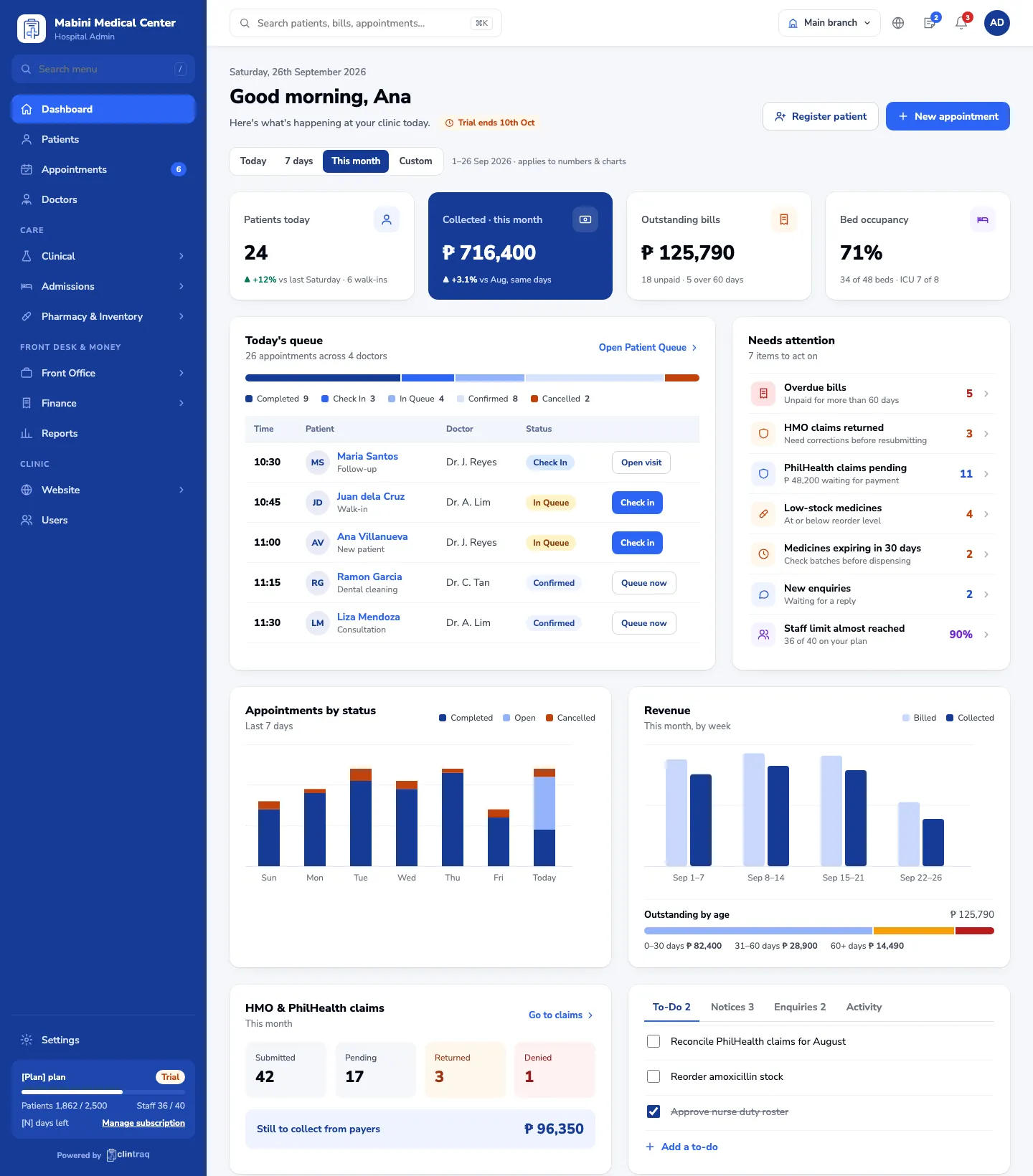
In Clintraq, the queue screen groups today's patients as Arriving today, In queue, Checked in and Done, and you can switch to a By doctor view to see each doctor's line separately. When a booked patient arrives, you move them to In queue and the doctor sees them waiting. For patients without an appointment you add a walk-in. Our Help Center guide to running the patient queue has the exact steps.
Make the queue visible to everyone
A queue that only the front desk can see is only half a solution. When patients can see the order, they stop asking about it, and the waiting room feels fairer.
There are two simple ways to do this:
- A waiting-room screen. Showing queue numbers on a TV tells patients when they are next without a word from your staff. Clintraq has a TV display you can open on any screen in the waiting room.
- Self check-in. A tablet kiosk lets patients with an appointment check themselves in, which frees the desk during the busy morning rush.
Whichever you choose, keep the language simple. "Now serving" and "next" are enough. Do not show patient names or conditions on a public screen; numbers protect privacy, which matters under the Data Privacy Act.
Reduce the wait before it starts
The best queue is a short one, and most of the work happens before the patient arrives.
Book realistic slots
Set slot lengths per doctor and per visit type. A follow-up and a first visit should not take the same time on the calendar. See our guide on booking an appointment to see how visit types work in Clintraq.
Cut no-shows
Every empty slot caused by a no-show pushes the rest of the day around. Reminders by email a day and an hour before the visit help, and we cover the habit in detail in how to reduce patient no-shows with automated appointment reminders.
Spread the load
If every patient wants 9:00 am, let the calendar guide them. Showing only free times when booking, whether by phone or online, naturally spreads patients across the day. The appointments and queue features are built around this: one calendar for the phone, website and walk-ins.
Measure and adjust each week
You cannot improve what you do not look at. Once a week, spend ten minutes asking:
- At what time of day is the waiting room fullest?
- Which doctor's line is longest, and is their slot length realistic?
- How many walk-ins did we see, and did they delay booked patients?
- How many appointments ended as no-shows?
Small changes make a big difference: opening one extra slot in the busiest hour, moving a doctor's first patient earlier, or reminding patients to arrive 10 minutes before their time rather than at their time.
If you are still deciding what tools your clinic needs, our buyer's guide to clinic management software lists what to look for beyond the queue.
Frequently asked questions
Should walk-ins be seen before booked patients?
Usually not. A booked patient made a commitment and expects to be seen near their time. Fit walk-ins into gaps or add them to the end of the line, and make an exception only for urgent cases decided by a nurse or doctor.
Do we need a TV display for a small clinic?
No, but it helps even in small rooms. Any screen that shows queue numbers saves your front desk from repeating "you are next" all day. If a screen is not possible, a clearly written rule and a quick word when a patient is called still work.
How do we handle a doctor who is running late?
Tell waiting patients honestly and early, offer to move later patients to another doctor if the schedule allows, and review that doctor's slot lengths at the end of the week. A by-doctor view of the queue makes the delay obvious sooner.
A calmer waiting room comes from a clear routine, visible numbers and realistic bookings. If you want to see how the queue, calendar and check-in work together, take a look at the Clintraq appointments and queue page and decide what would help your front desk most. Better clinic patient queue management starts with one change this week.